Published on
March 13, 2026

Dynamic Tariff Guide

Share this post
Dynamic Tariff Guide

Is a dynamic electricity tariff right for your business?

A plain-English guide to dynamic pricing, how it can cut your energy bill, and what to watch out for

March 2026  ·  tarifftribe.co.uk

Your electricity bill explained

Most businesses are on a fixed-rate electricity tariff. That means you pay the same price for every unit of electricity you use, no matter what time of day it is. Simple — but it might be costing you more than it should.

Here’s the thing: electricity isn’t the same price all day. It’s cheap overnight when most people are asleep and demand is low. It gets expensive in the evening rush hour — typically 4pm to 7pm — when everyone gets home and starts cooking, watching TV, and charging their devices at the same time.

A dynamic time-of-use tariff passes those price differences on to you directly. Use electricity when it’s cheap and you pay less. Use it during the expensive evening peak and you pay more. For many businesses, this is a significant opportunity to cut their energy bill — without using any less electricity.

Fixed vs dynamic: what’s the difference?

The chart below shows how a fixed tariff compares to a dynamic one across a typical day. On a fixed tariff, the dashed line shows you’re paying the same rate whether it’s 3am or 6pm. On a dynamic tariff, the price rises and falls with actual demand.
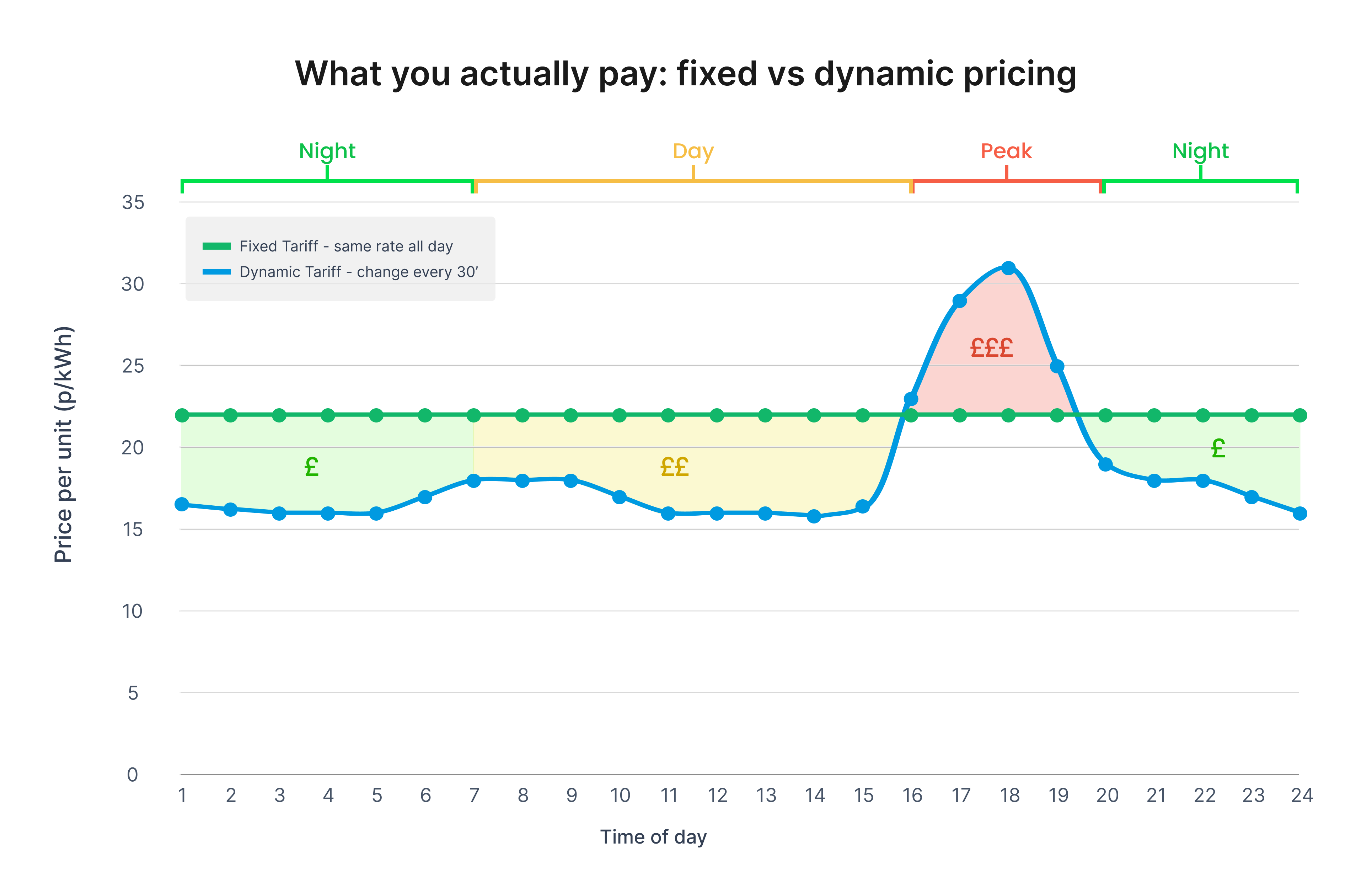
Chart 1: On a fixed tariff you pay an average rate all day. A dynamic tariff reflects what electricity actually costs at each moment — cheaper overnight, more expensive at peak times. (Illustrative)

The shaded areas show where you win and where you need to be careful. The purple shading shows where a dynamic tariff is cheaper than fixed — which for most businesses is most of the day. The coral shading shows the expensive evening peak, where dynamic prices exceed the fixed rate.

The key insight: if your business doesn’t use much electricity between 4pm and 7pm, you could be paying significantly less than you are right now.

Which businesses benefit most?

The savings available from a dynamic tariff depend almost entirely on when your business uses electricity. The chart below shows how different types of business stack up.
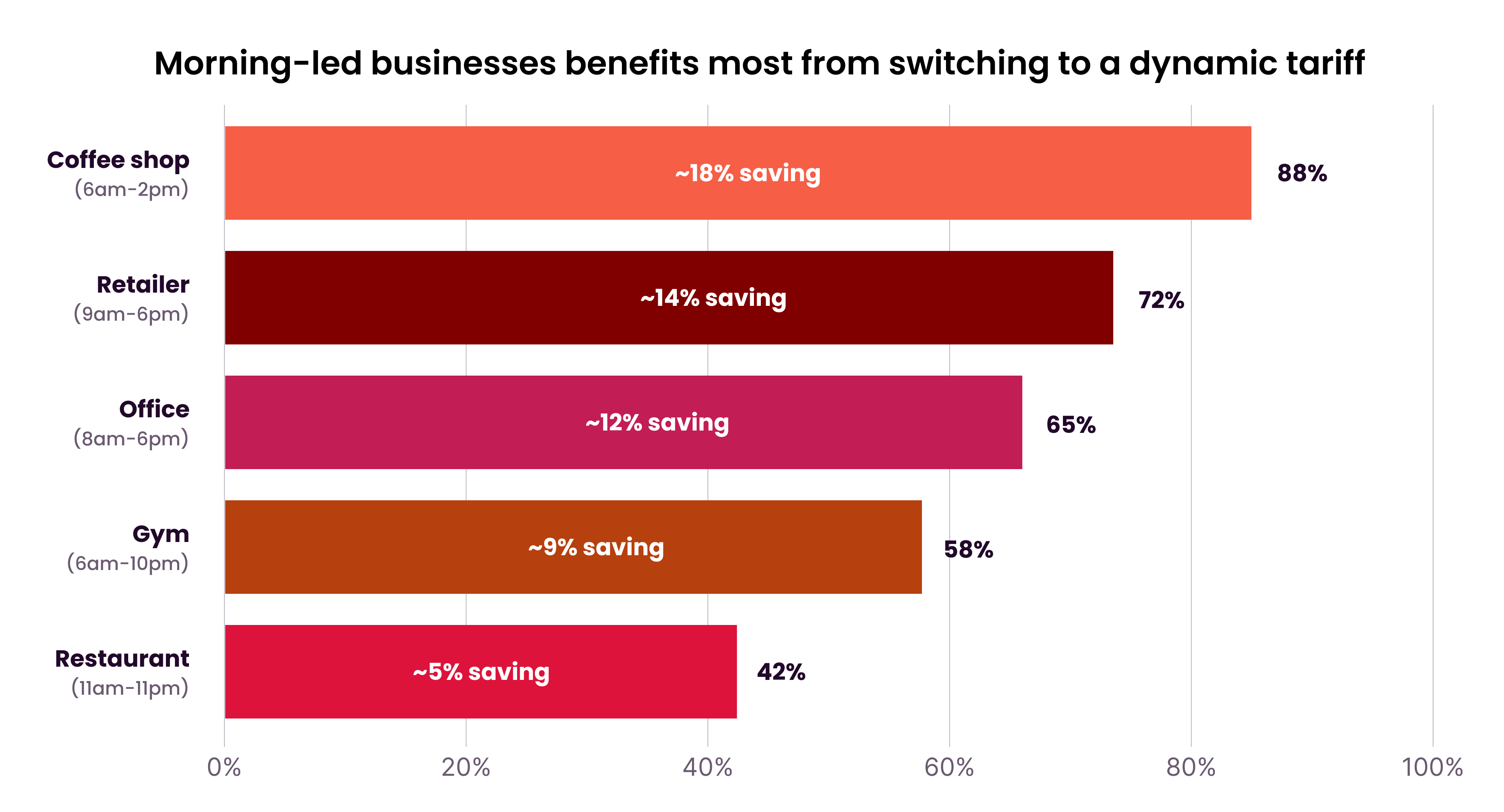
Chart 2: Businesses that operate mainly in the morning or daytime use most of their electricity during cheaper off-peak hours. (Illustrative)

Coffee shops and morning-led businesses come out on top. If you open at 6am and close at 2pm, your coffee machines, grinders, fridges and lights are running almost entirely during the cheapest hours of the day. Switching to the right dynamic tariff could reduce your electricity costs by around 15–20%.

Restaurants and evening venues face a trickier calculation — they trade right through the expensive peak window and need to think more carefully about whether a dynamic tariff suits them.

What loads could your business shift to off-peak hours?

  • Refrigeration and cold storage — pre-cool overnight, coast through the peak
  • Dishwashers and laundry — run before the morning rush rather than during service
  • EV charging — charge overnight rather than during the working day
  • Water heating — pre-heat storage boilers at night
  • Battery storage — charge cheap overnight, use during the day

The different types of dynamic tariff

Dynamic tariffs come in a few flavours. Here’s what you need to know:

  • Half-hourly tariffs

The most flexible option. Prices change every 30 minutes based on the wholesale electricity market, and are published the evening before. You can plan ahead, shift loads on cheap days, and benefit from very low overnight prices. Octopus Shape Shifters Agile is a well-known example. Best suited to businesses with some flexibility in when they use electricity.

  • Time-of-use tariffs with fixed bands

These have two or three set price tiers — typically a ‘peak’ rate, an ‘off-peak’ rate, and sometimes a very cheap overnight rate. The rates are fixed in advance, so there’s no day-to-day variability. A good middle ground: you still benefit from cheaper off-peak hours, but your bill is more predictable.

What’s the catch? Understanding price volatility

Dynamic tariffs are not without risk, and it’s important to go in with your eyes open.

The same mechanism that saves you money in normal conditions can work against you when something unexpected happens in the energy market. When wholesale prices spike — due to extreme weather, a geopolitical event, or a sudden surge in demand — peak prices on a dynamic tariff can temporarily rise well above what you’d pay on a fixed contract.

Chart 3: Dynamic tariffs typically undercut fixed rates during stable conditions. But during a market shock — like the recent conflict-driven price spike — peak prices can temporarily exceed the fixed rate. (Illustrative)

The chart above shows this in practice. During a stable period, the dynamic tariff is almost always cheaper. When a shock hits the market, peak prices can spike sharply — sometimes for days or weeks at a time.

This doesn’t mean dynamic tariffs are a bad idea. It means you need to manage them actively, not just sign up and forget about them.

Five ways to manage the risk on a dynamic tariff

  • Know your usage pattern before you switch. Ask your supplier for your half-hourly smart meter data so you can see exactly when you use electricity.
  • Set up price alerts. Most agile tariff apps let you know in advance when tomorrow’s peak prices are unusually high — so you can plan to use less electricity during those hours.
  • Don’t switch during a price spike. If markets are already volatile, wait for things to calm down before switching. The underlying tariff economics are easier to judge in normal conditions.
  • Consider a blended approach. Larger businesses sometimes keep some electricity on a fixed contract as a safety net, while putting the rest on a dynamic tariff.
  • Watch your renewal date. The riskiest position is a fixed contract about to expire in a volatile market. If that’s you, get advice now rather than rolling onto whatever your supplier offers.

Is a dynamic tariff right for your business?

Ask yourself these three questions:

  • When do you actually use electricity? 

If you can get hold of your smart meter data (your current supplier can provide this), you’ll be able to see exactly when your consumption peaks. If most of it happens before 4pm, you’re well-placed.

  • Do you have any loads you could move? 

Even small changes — running the dishwasher at 10pm rather than 7pm, charging the van overnight — add up over a year.

  • Can you live with some bill variability? 

A dynamic tariff means your monthly bill will fluctuate. Most months will be lower than expected; occasionally, during a market spike, they might be higher. If having a fixed, predictable bill is critical to your cashflow, a banded time-of-use tariff may suit you better than a fully agile product.

How Tariff Tribe can help

At Tariff Tribe, we help small and medium-sized businesses understand their energy usage and find tariffs that actually suit how they operate — not just the cheapest headline rate.

If you’d like to find out how your business would perform on a dynamic tariff, our free comparison tool can give you a personalised estimate based on your real consumption data.

Get started

  • Visit tarifftribe.co.uk to run a free comparison
  • Or contact our team directly and we’ll walk you through your options

This guide was produced by Tariff Tribe Limited. Data and pricing illustrations are based on Elexon half-hourly settlement prices and published Octopus Energy tariff rates. Chart data is illustrative and intended to show general pricing patterns rather than specific current rates. © Tariff Tribe Limited 2026.

Share this post

Getting a better energy deal

Clement Attwood
Clement Attwood
Author